
Know this
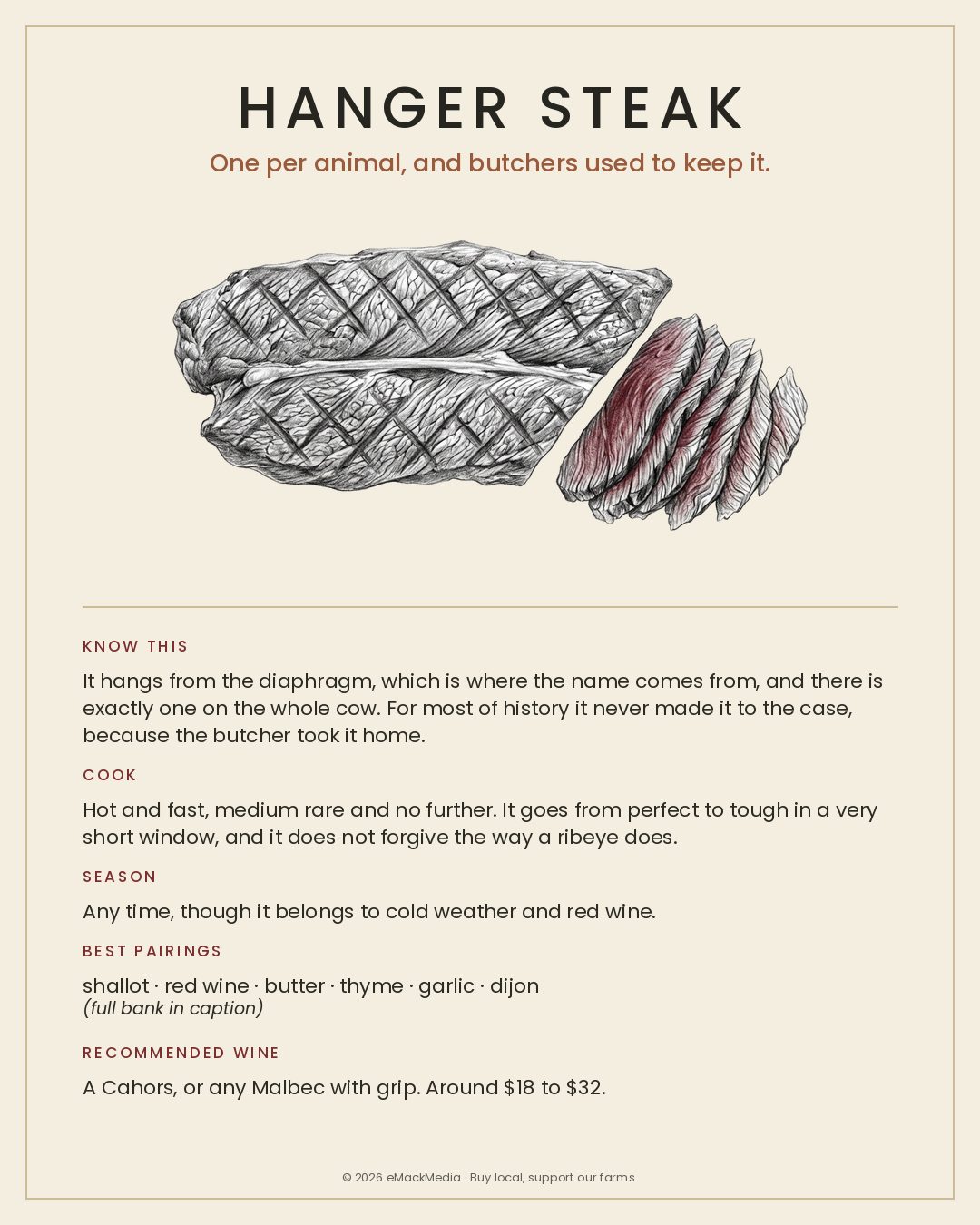
It hangs from the diaphragm, which is where the name comes from, and there is exactly one on the whole cow. For most of history it never made it to the case, because the butcher took it home. The French call it onglet, the Americans called it the butcher's steak, and both names mean the same thing: this is what the person who knows the animal chose for themselves. It tastes more like beef than anything else in the case, closer to iron and liver than the mild polite flavor of a strip. Chef secret: there is a thick cord of sinew running down the middle. It never softens, no matter how you cook it. Pull it out and you are left with two lobes, and their grains run in different directions, so look at each one before you slice.
Cook
Hot and fast, medium rare and no further. It goes from perfect to tough in a very short window, and it does not forgive the way a ribeye does. Rest it, then slice thin across the grain.
Season
Any time, though it belongs to cold weather and red wine.
Best pairings
shallot · red wine · butter · thyme · garlic · dijon
Also worth trying: black pepper, chimichurri, blue cheese, watercress, frites, bordelaise, anchovy, horseradish, arugula, marrow.
Recommended wine
A Cahors, or any Malbec with grip. Around $18 to $32.
See the full pairing guide