Field Notes

The technique cards.

Short, useful kitchen rules, one card each. Save them now. You’ll need them later.

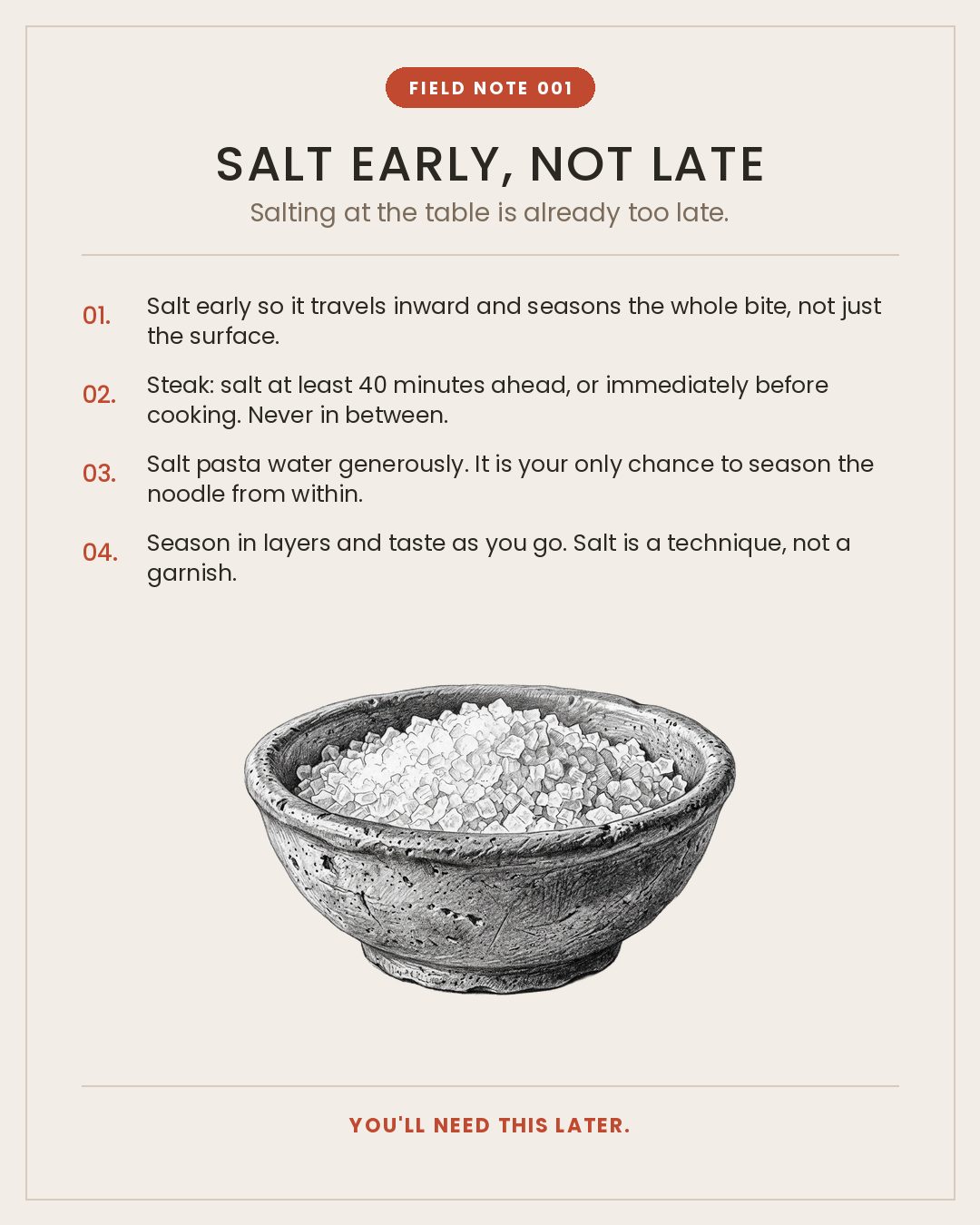
Field Note 001, Salt early, not late.

Field Note 001

Salt early, not late.

Salt is not a finishing move, it is a technique. Here is how to actually use it.

  1. Salt early so it travels inward and seasons the whole bite, not just the surface.
  2. Steak: salt at least 40 minutes ahead, or immediately before cooking. Never in between.
  3. Salt pasta water generously. It is your only chance to season the noodle from within.
  4. Season in layers and taste as you go. Salt is a technique, not a garnish.

You'll need this later.
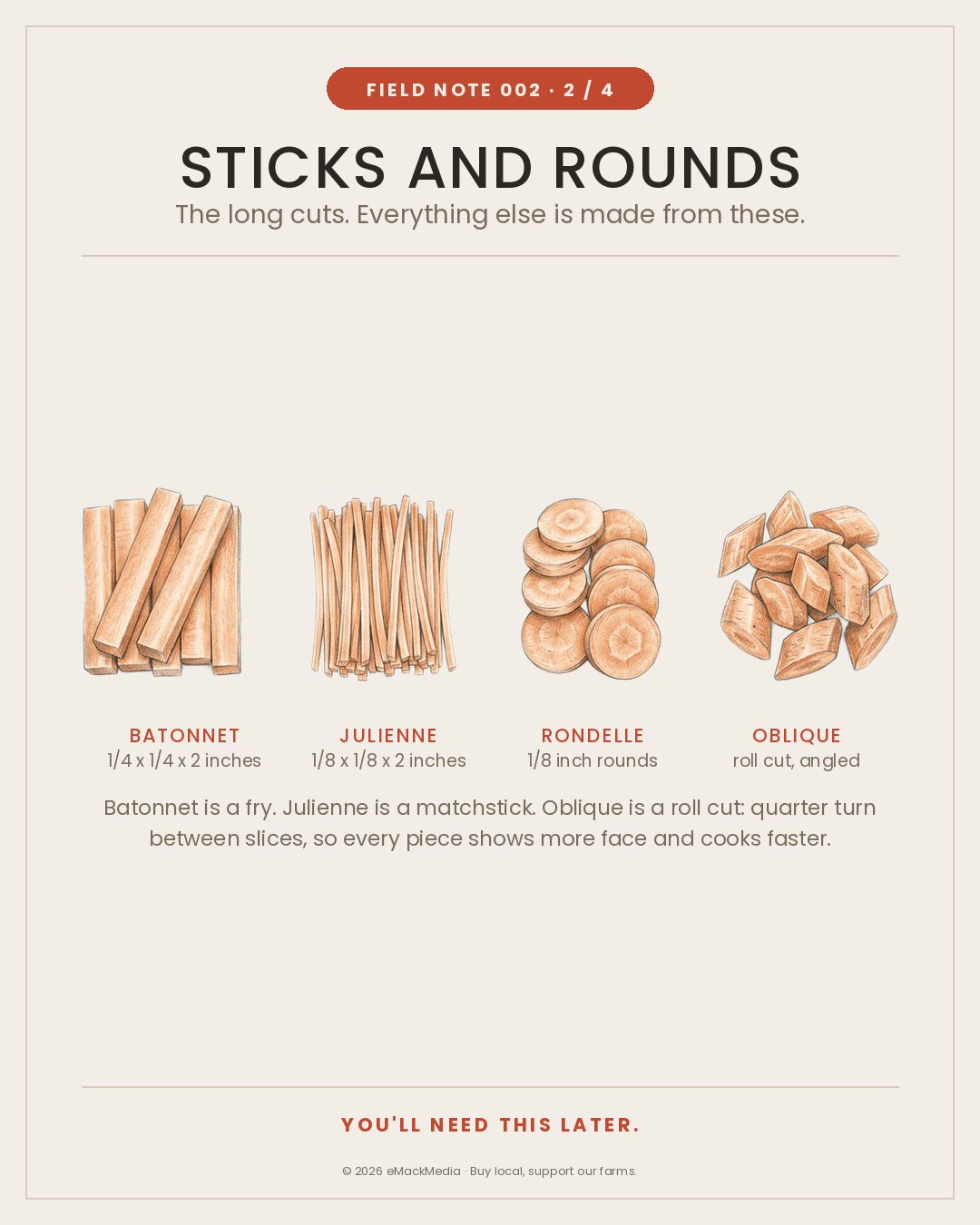
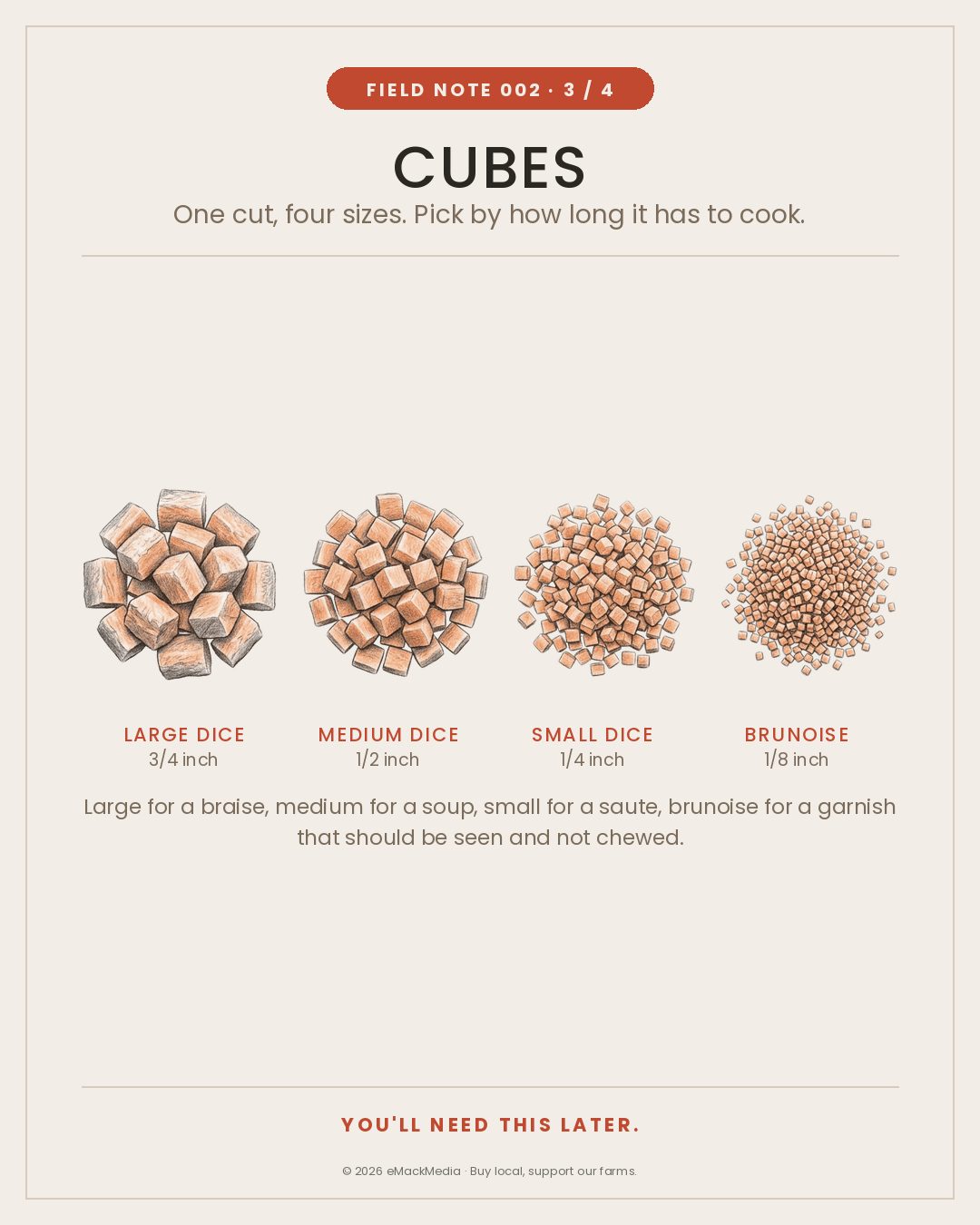
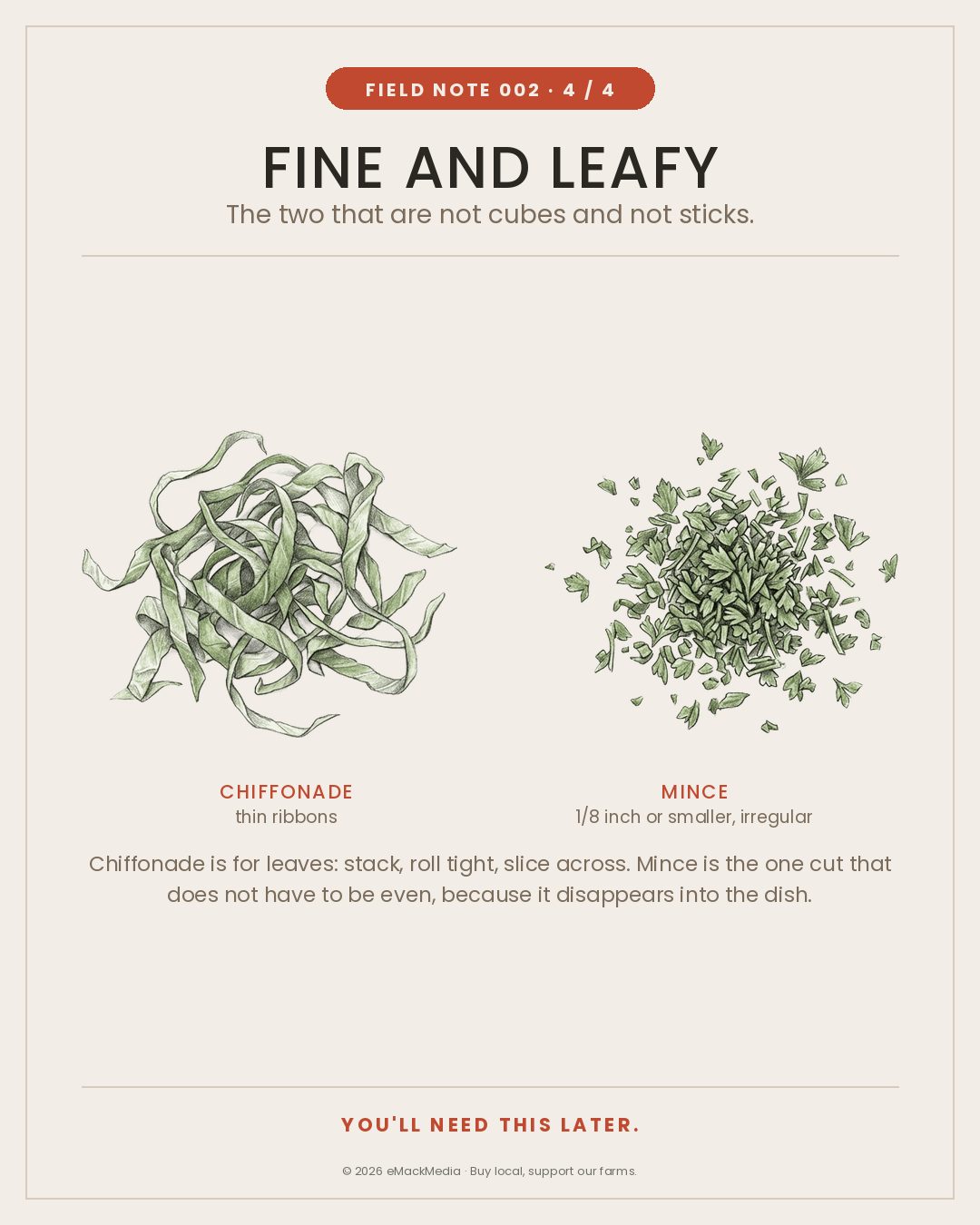
Field Note 002, Ten cuts., slide 1Field Note 002, Ten cuts., slide 2Field Note 002, Ten cuts., slide 3Field Note 002, Ten cuts., slide 4

Field Note 002

Ten cuts.

They are not ten things to memorize. They are one ladder.

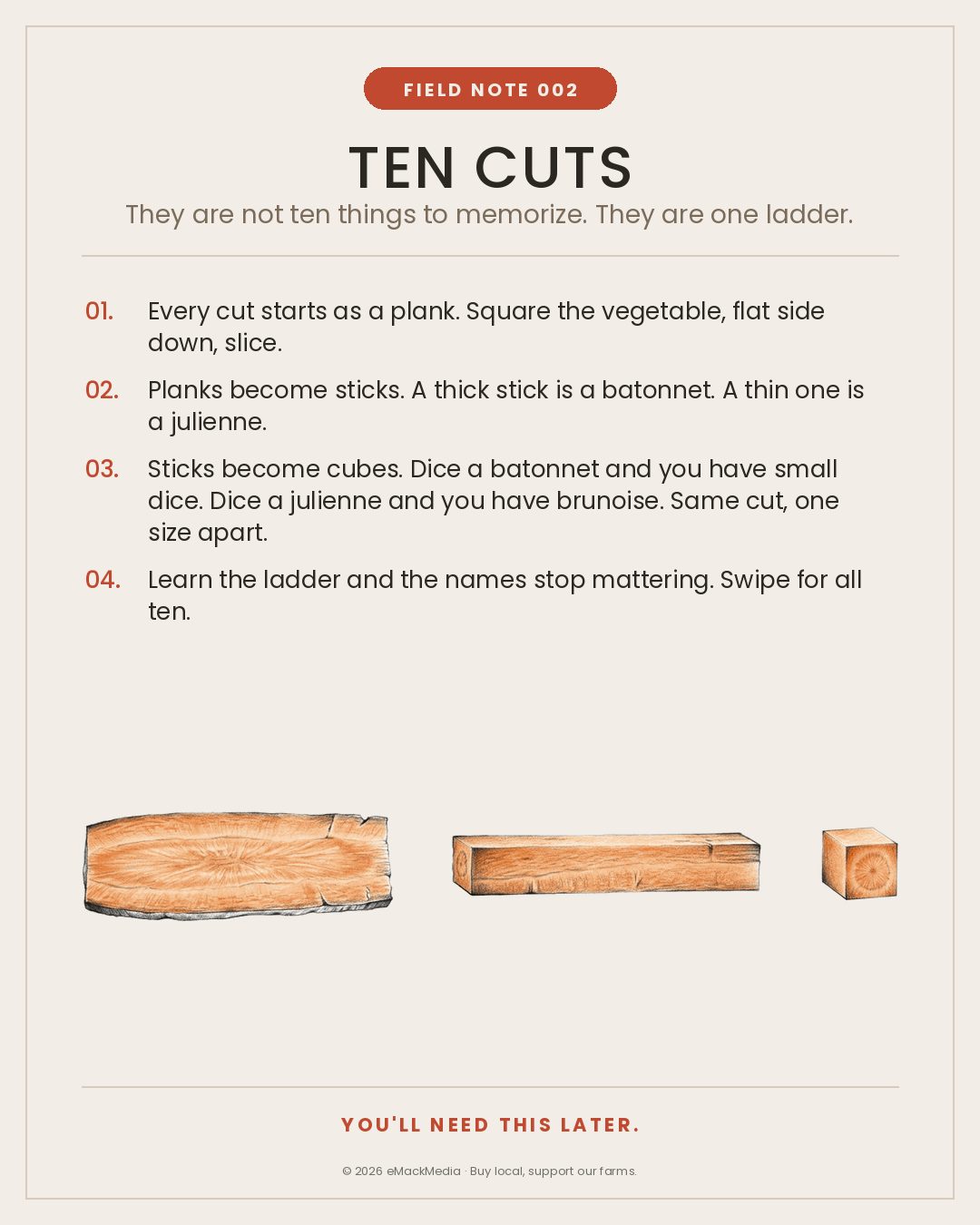
  1. Every cut starts as a plank. Square the vegetable, put a flat side down, slice.
  2. Planks become sticks. A thick stick is a batonnet. A thin one is a julienne.
  3. Sticks become cubes. Dice a batonnet and you have small dice. Dice a julienne and you have brunoise. Same cut, one size apart.
  4. Learn the ladder and the names stop mattering.

Swipe for all ten, with the sizes: batonnet, julienne, rondelle, oblique, large dice, medium dice, small dice, brunoise, chiffonade, mince.

Save this one. You'll need this later.

Field Note 006, Mushrooms deserve better.

Field Note 006

Mushrooms deserve better.

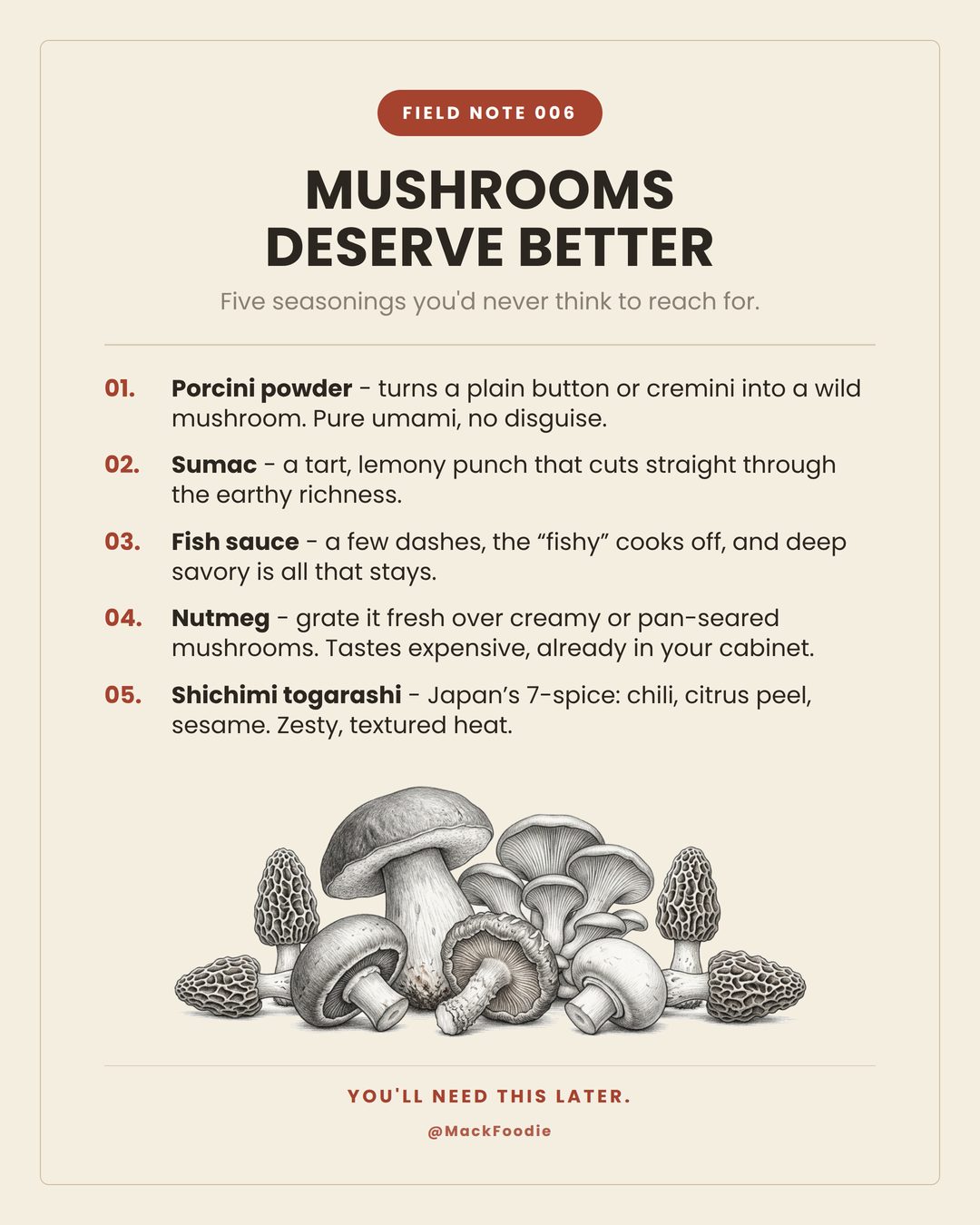
Your mushrooms are bored. Salt and thyme are fine, but here are 5 seasonings almost nobody reaches for, and every one makes fungi taste like a restaurant did it:

  1. Porcini powder: turns a plain cremini into a wild mushroom. Pure umami.
  2. Sumac: tart, lemony punch that cuts the earthy richness.
  3. Fish sauce: a few dashes, the "fishy" cooks off, deep savory stays.
  4. Nutmeg: grate it fresh over creamy or pan-seared 'shrooms. Tastes expensive, and it's already in your cabinet.
  5. Shichimi togarashi: chili, citrus peel, sesame. Zesty, textured heat.

Save this for your next mushroom night.

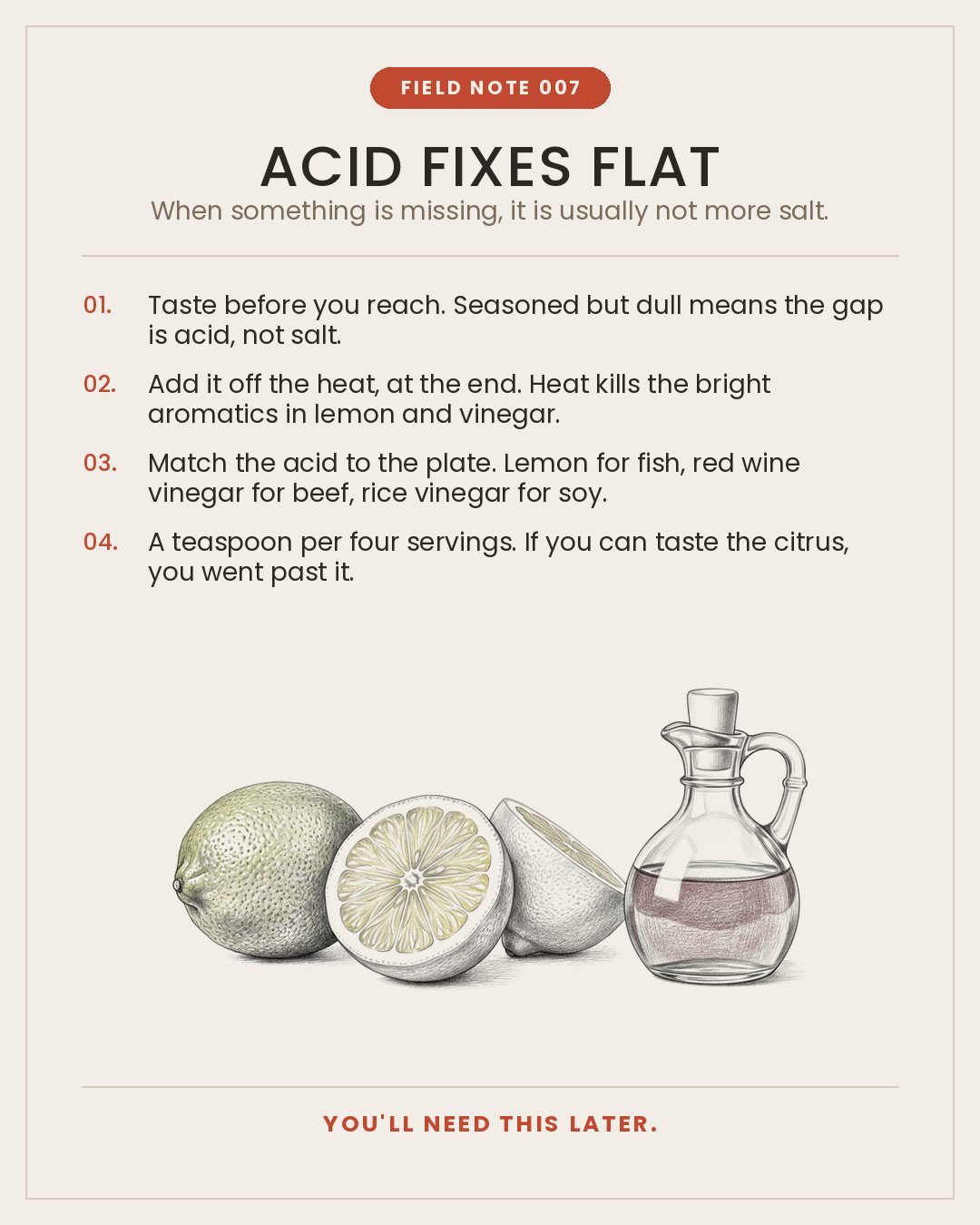
Field Note 007, Acid fixes flat.

Field Note 007

Acid fixes flat.

When a dish tastes like it is missing something, it is almost never more salt. Here is how to actually use acid.

  1. Taste before you reach. If the food is properly seasoned but still dull, the gap is acid, not salt. More salt just makes it salty and dull.
  2. Add it off the heat, at the end. Heat drives off the bright aromatics in lemon and vinegar, so a squeeze at the start is a squeeze wasted.
  3. Match the acid to the plate. Lemon for fish and greens, red wine vinegar for beef and beans, rice vinegar for anything with soy, a splash of the pickle jar for anything rich and fried.
  4. Start with a teaspoon per four servings. The dish should taste like itself, only louder. If you can taste the citrus, you went past it.

You'll need this later.

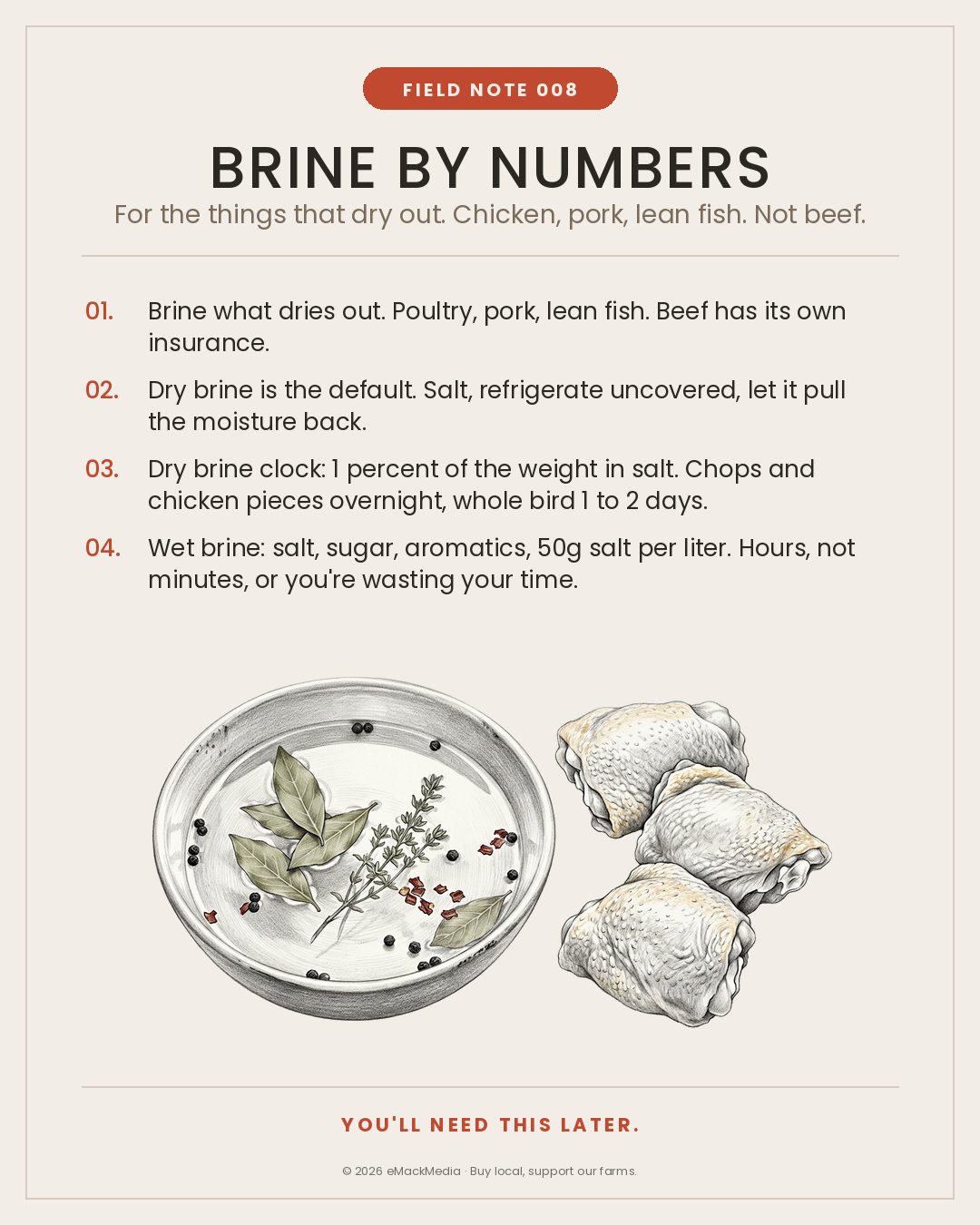
Field Note 008, Brine by numbers.

Field Note 008

Brine by numbers.

Note 001 told you when to salt. This one is for the things that actually need brining: chicken, pork, and lean fish.

  1. Brine what dries out. Poultry, pork, and lean fish have no fat to protect them, so they go from done to ruined in about a minute. Beef does not belong here. A steak has its own insurance.
  2. Dry brine is still the default. Salt the surface, refrigerate uncovered, let the meat pull its own moisture back in. Better skin, better browning, no bucket in the fridge.
  3. The dry brine clock. Salt at 1 percent of the meat's weight, and weigh it, salt brands vary wildly by volume. Chops and chicken pieces go overnight. A whole bird gets one to two days.
  4. Wet brine. Salt, a little sugar and aromatics, about 50 grams of salt per liter of water. Give it hours, not minutes: chops 4 to 6 hours, a whole bird overnight. A quick dunk is wasted effort, and much longer than that turns the texture to ham.

You'll need this later.