
Know this
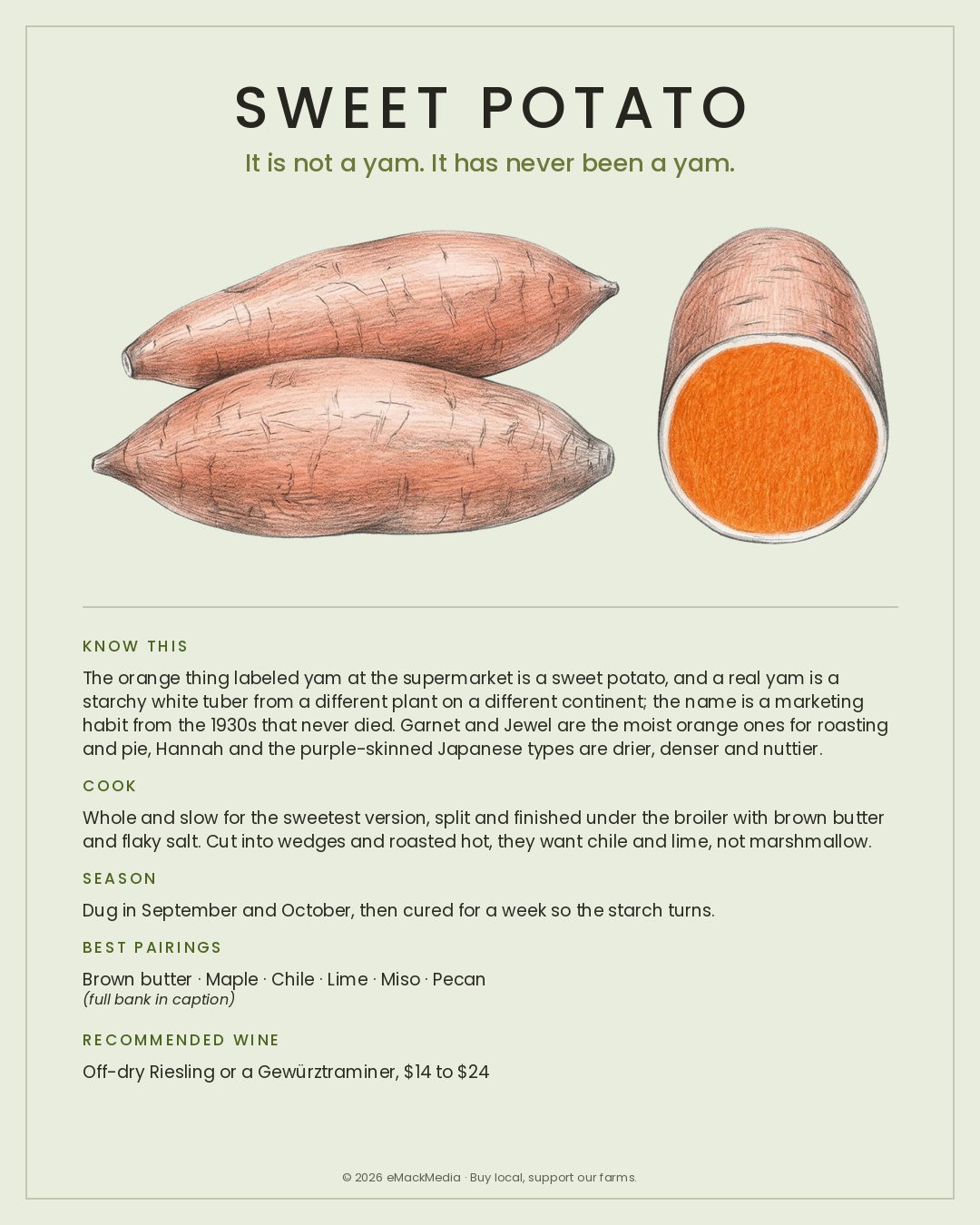
The orange thing labeled yam at the supermarket is a sweet potato, and a real yam is a starchy white tuber from a different plant on a different continent; the name is a marketing habit from the 1930s that never died. Garnet and Jewel are the moist orange ones for roasting and pie, Hannah and the purple-skinned Japanese types are drier, denser and nuttier. Buy firm, smooth, no soft ends, and keep them in a cool cupboard, never the fridge, where the cold gives them a hard center that will not cook out. Chef secret: start them cold and go slow. The enzyme that turns their starch to sugar works between about 135°F and 170°F, so a whole sweet potato in a 300°F oven for an hour and a half comes out tasting like candy, and one blasted at 450°F never gets the chance.
Cook
Whole and slow for the sweetest version, split and finished under the broiler with brown butter and flaky salt. Cut into wedges and roasted hot, they want chile and lime, not marshmallow. The skin is the best part either way.
Season
Dug in September and October, then cured for a week so the starch turns. They are at their best through the winter.
Best pairings
Brown butter · Maple · Chile · Lime · Miso · Pecan
Also worth trying: sage, bacon, cinnamon, coconut, black pepper, rosemary.
Recommended wine
Off-dry Riesling or a Gewürztraminer, $14 to $24
See the full pairing guide